
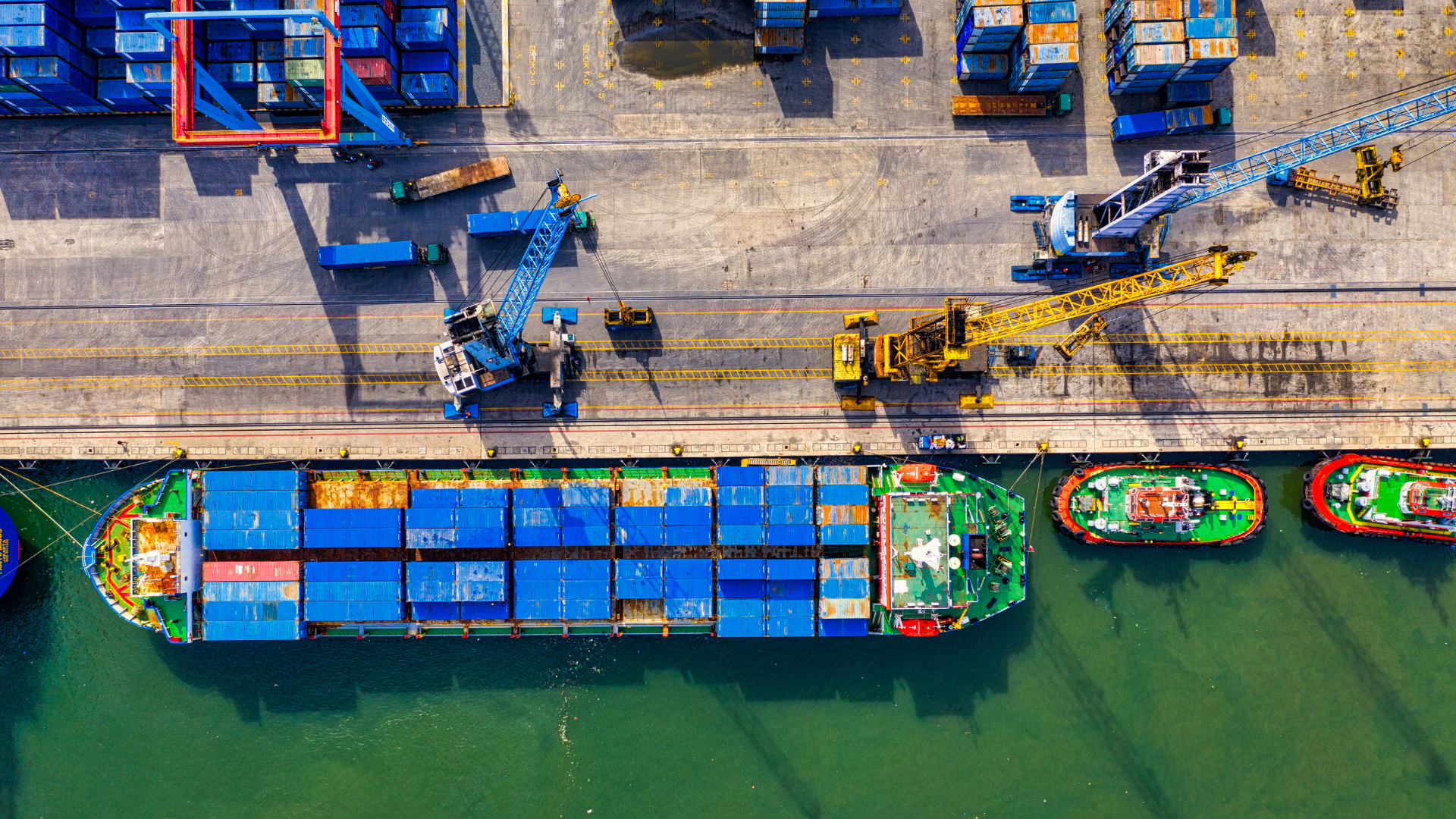
“In these volatile times, you have to be on top of your game.” – Corey Weekes
Anyone in the supply chain industry knows that the field has faced tremendous disruption over the past few years. The COVID-19 pandemic introduced massive uncertainty into global supply chains, and the disruptions have only continued through global conflict, natural disasters and technological change. Companies have woken up to the immense importance that supply chains play in organizational strategy and resilience, and many leaders have been tasked with future-proofing their supply chains—while also fighting day-to-day fires. Now, AI is presenting a host of opportunities, but many leaders are uncertain how to go about adding them to their supply chain tech stacks.
On the Argentus Blog, we regularly speak with supply chain leaders to get their perspective on the state of the field. For our latest interview, we couldn’t think of a better person to speak to about these topics than Corey Weekes.

Corey Weekes is a global supply chain and logistics executive with more than 25 years of experience leading complex, multi-channel operations and delivering millions in EBIT improvement through practical, results-driven transformation. Across his career, Corey has held senior leadership roles spanning apparel retail, GMP medical device manufacturing, paperboard production, oil and gas, and regulated cannabis.
Corey has most recently served as a Vice President, Global Logistics, where he led global transportation (all modes), distribution center network strategy and storage, and enterprise 3PL and parcel carrier partnerships across North America, EMEA, and APAC. In parallel, Corey is the Managing Partner and Co-Founder of The Eighty-Four Group Consulting, providing fractional supply chain and operations leadership to organizations from start-ups to $250M USD in revenue.
In our Q&A, Corey had a great insights to offer about:
- The biggest priorities facing supply chain leaders today
- The tangible impacts of AI on the supply chain industry, as well as his advice for AI implementation
- His advice for junior supply chain professionals seeking to progress in their careers
- And more!
As you’ll see from the Q&A, Corey is a big picture supply chain thinker with a laser focus on execution, and his finger on the pulse of the biggest issues affecting the field today. We hope you enjoy this interview as much as we did!
How would you describe the state of supply chain management today? What should leaders be focused on as priorities?
I would identify three main factors: First, there’s a lot of volatility in the industry. It’s an industry where you’re managing resources: plan, source, make, deliver, return. Across that span of operations there will always be volatility, but since COVID, it’s a constant state of disruptions, either through impacts on the supply side, or on the demand side through changing customer profiles and demographics. Change is a constant, no matter who you are.
Second, changing technology is a big factor and AI is the biggest trend. AI is going to be a game-changer as companies move forward and leaders look to manage supply chains, which we will talk about.
Third, companies are also realizing that, to be competitive, it’s about execution. You have to have your execution dialed in, and your return on capital is as good as it can be, because competition is getting better. In these volatile times, you have to be on top of your game.
Volatility, technology, and execution: those would be my 3 biggest factors that are front of centre when it comes to supply chain management right now.
How should supply chain leaders address those challenges?
Companies have to be more intentional. It’s not a case of doing what we did for the past 2-3 years, adding 5% to the budget, and off we go. You have to manage short term, medium and long term in a more intentional manner. What is the economic model for your business? What makes it tick? What drives and adds value in your consumers’ eyes? Think about these big questions, and then re-engineer it in terms of how you manage your supply chain. You have to connect your short, medium and long term supply chain initiatives directly to the bottom line. To do that, execution is going to play a big part. If you use resources in the best way, that will always flow to the bottom line.
You want to look at your network. The tariff situation puts a lot of focus on where you’re getting products from, and moving them to. Do you have the best network that minimizes your tariffs, duties and other trade impact? That can do quite a bit in terms of impacting your spend.
Because of the volatility, building resilience is another focus. Building resilience is going to take money, which isn’t always desired by the financial community and shareholding community. But if you don’t build resilience in advance of disruption, you’re going to get dinged in the future when something breaks in the supply chain. It’s about working with your CFO to figure out how you can build resilience in the supply chain without rattling the markets.
AI is all over the news right now. What does this mean for supply chain management in your opinion?
At first I was a bit skeptical, but it’s no coincidence that folks like Jeff Bezos have come out of retirement to lead that initiative at Amazon. The more you dive into it, you realize that it will be similar to how we transitioned into the internet period in the late ‘90s and early ‘2000s. It’s going to be a foundational shift in terms of how businesses operate. We’re at the very early stages. It’s not going to solve all your problems in supply chain, but if well applied, it’s going to be a gamechanger.
In supply chain, we deal with so many partners, both internally and externally, that decisions have a natural cadence and you get bottlenecks. Top-performing companies will be able to leverage AI, in conjunction with human input, to speed up that decision making for supply chain functions. It’s about following the technology and moving beyond pilots to figure out how you can add value.
To give an example, forecasting is a big area of opportunity. AI tools can crunch numbers, do the math, and test and iterate a lot faster than a human alone. There’s a whole discussion in the industry right now in terms of planners’ roles, and the decisions that they make on a daily basis. AI has a lot to offer in terms of the logic of replenishment and channel allocation. I’m of the camp that it can’t do everything in your supply chain and be completely autonomous, but it can probably do 75% of a daily replenishment assessment, and operate under some rules to come up with the best reallocation decisions for inventory.
How should AI leaders approach this whole question of AI in the supply chain?
The key thing is, because AI is so pervasive, you can be like a deer in headlights and not know which path to go down. It helps to narrow in on a few core questions: what does your supply chain have to do to support your business strategy? What are the major bottlenecks or pain points that are preventing you from achieving that? As you answer those questions, think about where technology can help unlock some of those specific bottlenecks in your process.
If you don’t adopt that point of view, you’re going to chase all the shiny objects and risk working on something that’s not going to add value to your supply chain, and your organization. If you don’t focus on the value-add, the tools don’t matter. Focus on two or three bottlenecks, and pull in a team to apply the technology to clearing those specific bottlenecks.
Finally, it’s not going to be a question of AI replacing all your systems. There’s a lot of investment in WMS, TMS, and ERP systems to date. You’re not going to rip out a system that’s working. You need to figure out the architecture of how you deploy AI with your existing systems, and that’s something to think about with your CPO or CIO as well.
What advice would you give to young practitioners entering the industry or early in their roles?
Everyone in supply chain is tasked with executing the business’s overall strategy. You have to understand the “why” behind the role, behind the numbers, and behind your function. Be inquisitive, and think broadly: how is my work impacting the overall team and organization? How does it add value to customers? Understanding that is important for anyone new in the industry, because it connects you to your worth in the company, and how your role contributes to adding value to customers.
It’s important to understand the different components including trade, transportation, warehousing, planning, and purchasing. How are all of these topics impacted by the rapid changes happening in supply chain today? It’s important to have a broad view, so if you make a decision, you can think about its impacts. It allows you to be more creative, and present solutions that are end-to-end and not silo-specific.
Technology is changing quickly, and having Office skills isn’t enough anymore. I would encourage everyone in the industry now to understand technology architecture. You don’t have to be a JavaScript or Python programmer, but you have to understand how systems work. How does a WMS, TMS, and ERP work at a high level? By understanding the fundamentals of how information is managed, you can see where things are going, which helps you manage information in your department as well. Supply chains move physical goods, and to move physical goods, you need to move information. Financial knowledge, and financial acumen, is important. You have to understand the balance sheet, and the impact of your decisions on the P&L.
Beyond these factors, it’s important to be as cross-functional as possible. Supply chain is part of an organization, alongside marketing, accounting, finance, and HR. Understanding how these other departments connect to your world in supply chain is key. If you can improve your skills in those areas, it gives you that breadth as well as the functional skills to operate well.
We hope you found this interview with Corey Weekes as enlightening as we did! As always, stay tuned to the Argentus blog for upcoming news and insights about the supply chain field. And if you have any immediate or upcoming hiring needs in recruitment, reach out! Send an email to recruit@argentus.com outlining your needs.
0 Comments